

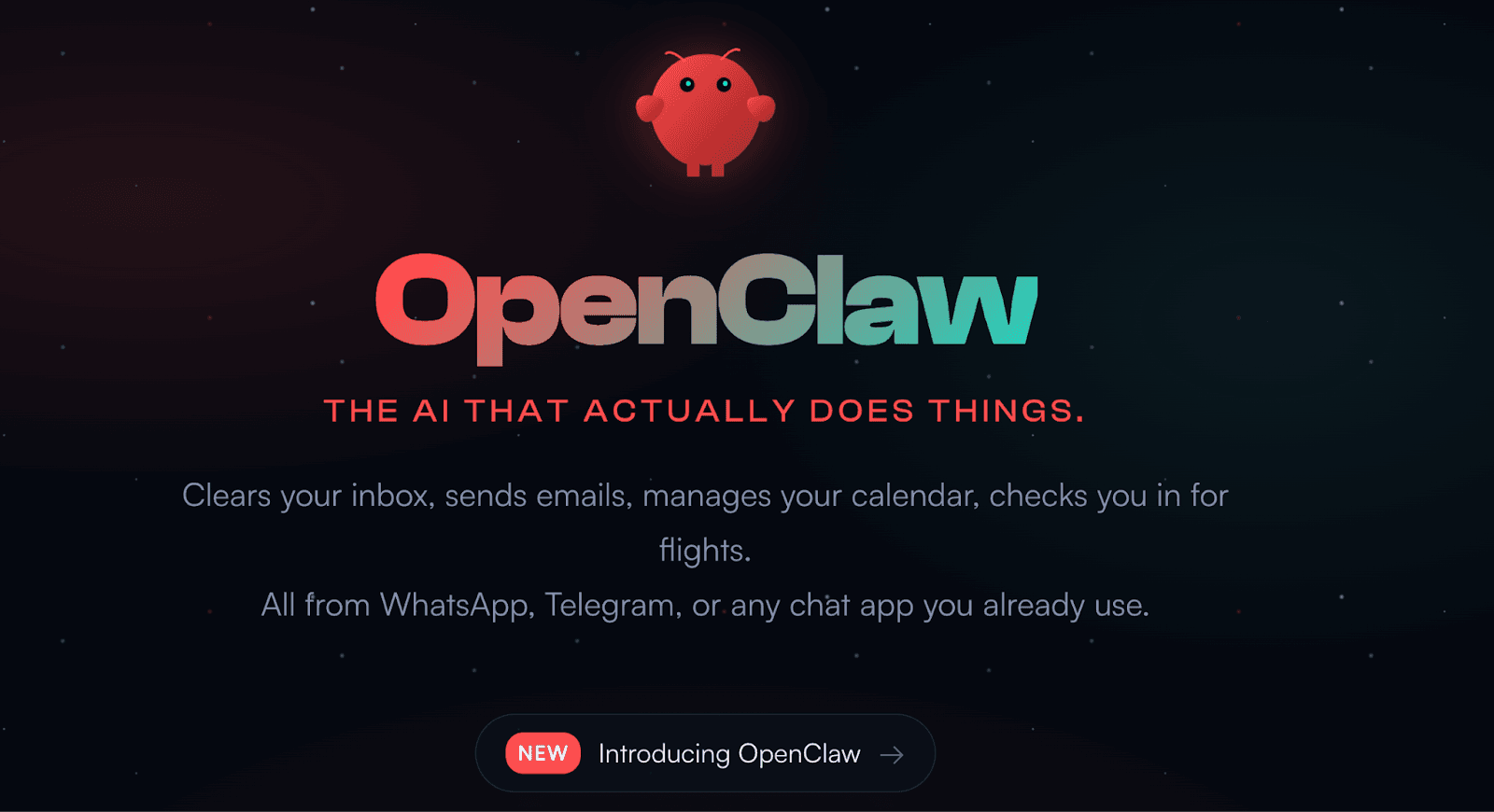
From Chatbot to Operator
Most AI tools still live in a tab. You ask a question, get text back, then do the work yourself.
Moltbot changed that pattern in 2026. Originally launched as Clawdbot, briefly renamed Moltbot, and later rebranded as OpenClaw, it became famous for one reason: it could execute.
What Moltbot Actually Does
Because it runs on your own machine or server, Moltbot can work directly with your environment instead of stopping at suggestions.
It can access local files, edit documents, run scripts, browse websites, handle repetitive admin tasks, and send back status updates. The shift is simple but massive: from AI that talks to AI that works.
The 'While You Sleep' Moment
Imagine ending your day with a single prompt: review a module, fix obvious inefficiencies, run tests, and prepare a summary.
Overnight, Moltbot can inspect files, apply changes, execute checks, and hand you a report by morning. No constant babysitting. No manual copy-paste loop. Just completed work.
Real-World Workflows People Use
Users connect it to messaging apps like Telegram, Slack, Discord, or WhatsApp and treat chat as a command center.
Common automations include email summaries, scheduling and reminders, research reports, morning briefings, folder cleanup, browser-based repetitive tasks, and remote system checks.
Why It Went Viral in 2026
First, it was local-first. People liked running it on their own hardware with tighter control over data and behavior.
Second, it executed end-to-end workflows instead of generating only text. Third, it was open-source, so builders could inspect, modify, secure, and extend it fast.
Power and Risk Arrive Together
An autonomous agent with file access, command execution, and communication permissions is powerful by definition.
That also means configuration quality matters. Early exposed setups made one thing clear: strong permission boundaries, logging, and operational guardrails are non-negotiable.
Why This Shift Matters
Moltbot represents a bigger transition in AI: from conversation tools to delegation systems.
When software can run useful tasks continuously in the background, individuals and teams stop using AI only for ideas and start using it for execution. That is why Moltbot, then OpenClaw, became one of 2026's defining AI stories.