

What Anthropic Claims Happened
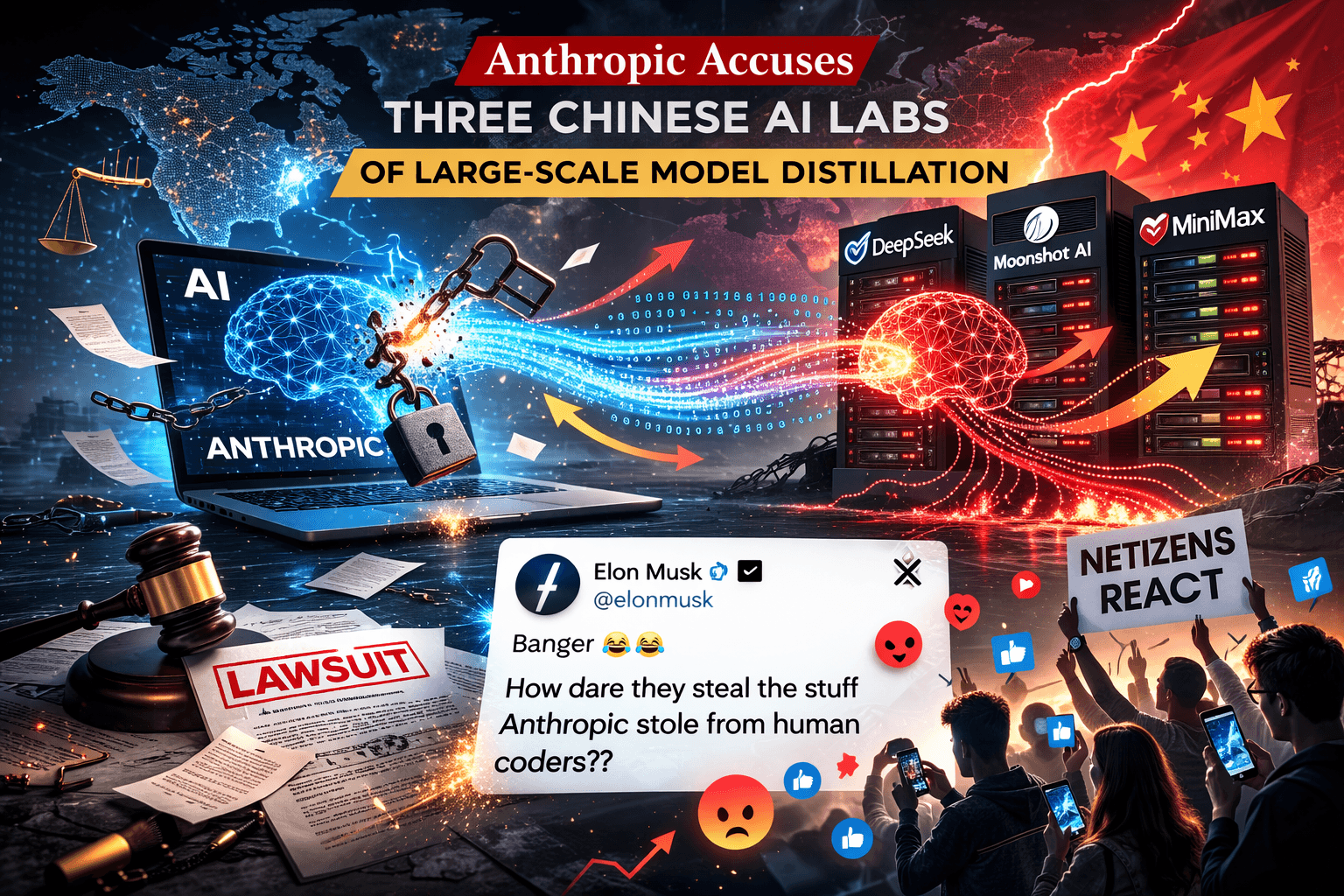
The global AI industry is facing renewed controversy after Anthropic accused three Chinese AI labs - DeepSeek, Moonshot AI, and MiniMax - of conducting what it described as industrial-scale distillation attacks on Claude.
According to Anthropic, the activity involved over 24,000 fraudulent accounts and more than 16 million exchanges with Claude, with signals including high-volume automated querying, suspicious account creation, and correlated infrastructure patterns.
Distillation itself is a common machine learning technique. Anthropic's position is that the scale and method in this case crossed from benchmarking into policy-violating extraction.

Community Reaction and Public Scrutiny
The announcement quickly spread across social platforms and triggered mixed responses. Some supported stronger protections for model providers, while others highlighted consistency issues around AI training norms.
Discussion broadened beyond the technical claim into legal and ethical questions: whether model outputs can be protected assets, where competitive benchmarking ends, and whether major labs are applying standards consistently across the ecosystem.
Lawsuit Context Added to the Debate
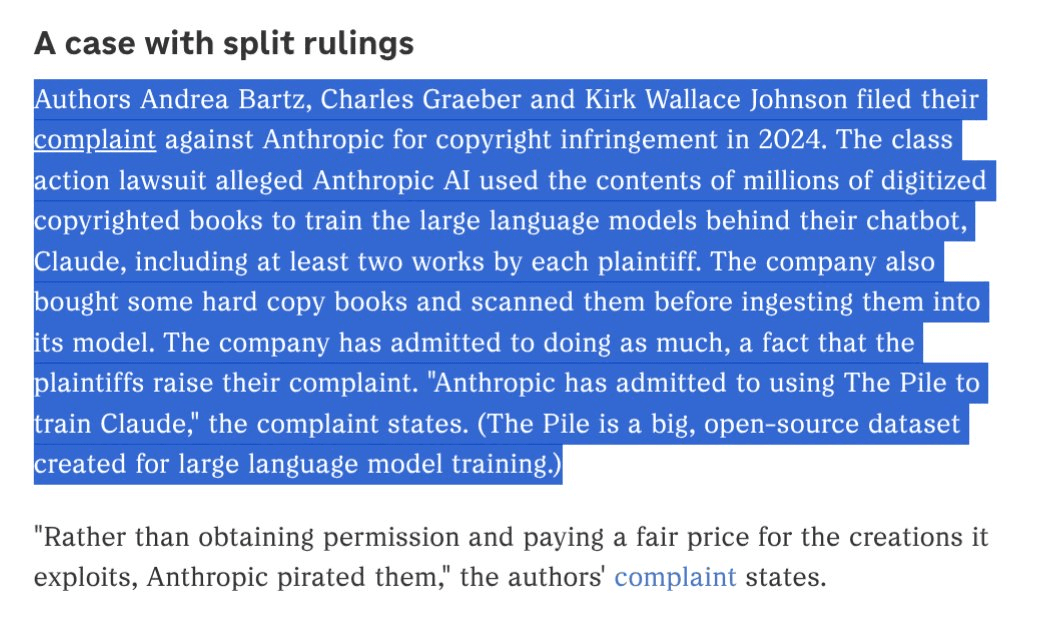
A major thread in the reaction referenced prior copyright litigation involving Anthropic, including claims tied to books used in model training and references to The Pile dataset.
That context intensified scrutiny of how the industry defines fair use, licensing, and acceptable downstream reuse of model behavior.
Industry Figures Weigh In
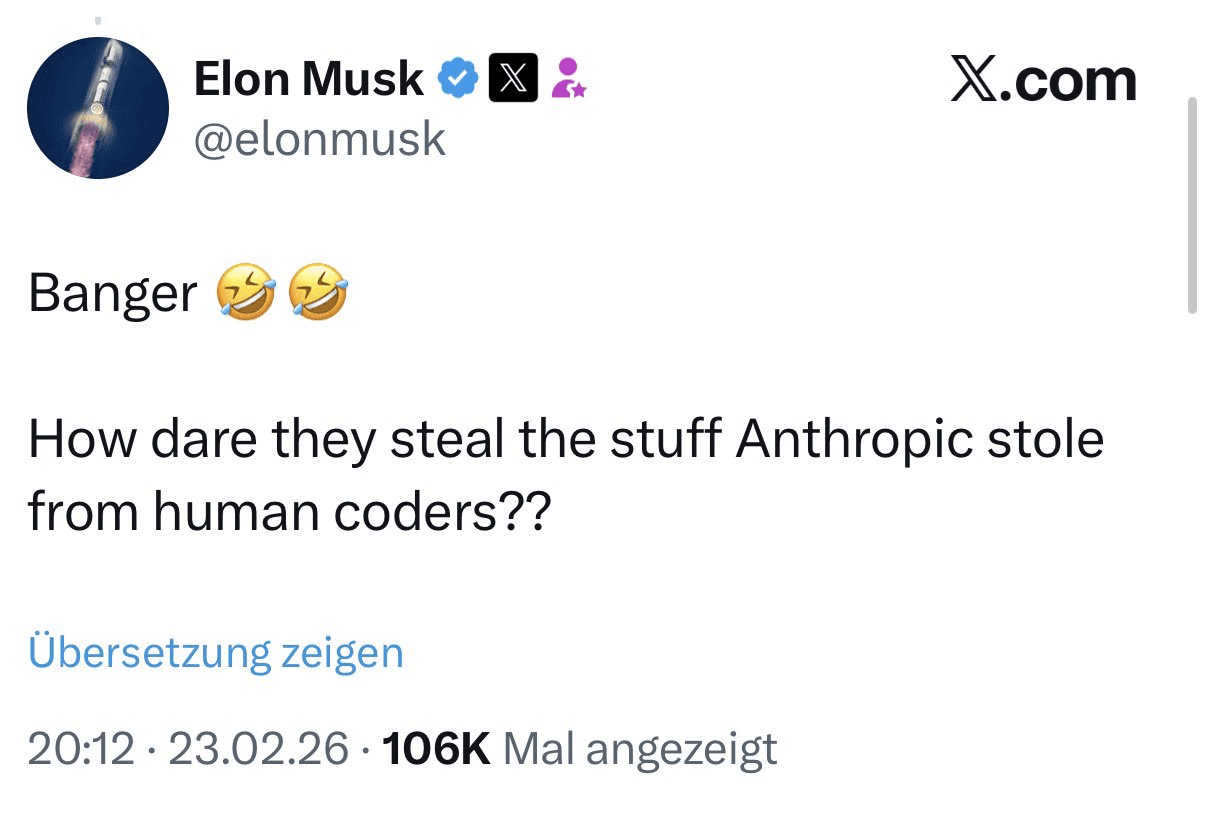
Tech entrepreneur Elon Musk also reacted publicly, amplifying discussion around AI training ethics and competitive fairness.
His response increased engagement and pushed the incident deeper into mainstream tech discourse beyond research circles.
A Familiar Pattern in the AI Race
The controversy mirrors earlier accusations across the sector about model distillation and extraction-style competitive behavior.
As models become more capable and commercially valuable, outputs themselves are increasingly treated as strategic assets - creating fresh tension between open learning dynamics and proprietary protection.
Why This Matters
The outcome could shape future platform policies, legal interpretations of model outputs, cross-border competition standards, and transparency expectations in AI development.
As global AI competition accelerates, governance frameworks may struggle to keep pace - making capability protection as important as capability creation.